Chocolate is a popular and energy-boosting food. It is often considered the most attractive treat in the world. Common chocolates on the market are divided into dark chocolate, milk chocolate, and white chocolate. Aside from additional ingredients, the main components of these three types of chocolate are cocoa powder, cocoa butter, and sugar. This product has many benefits for health. For example, consuming chocolate is good for heart health, improving memory, reducing cholesterol, and more. One of the important factors in maintaining the characteristics and quality of chocolate is its proper packaging. Preserving and storing chocolate to prevent changes in its nature is one of the main reasons for its packaging. Improper packaging can lead to spoilage, bad taste and odor, and chocolate blooming.
One of the manufacturers of chocolate packaging machines is Packen Company. In this article, we will review the machines fabricated by this company and discuss the reasons for chocolate packaging. Stay with us.
Different Types of Chocolate Packaging Machines
The chocolate packaging machines described below are designed and manufactured by Packen Company to enhance efficiency and maintain product quality:
- Automatic Tray Sealer Packaging Machine
- Semi-Automatic Tray Sealer Packaging Machine
- Vacuum Chamber Packaging Machine
- Manual Sealing Machine
Automatic Tray Sealer Packaging Machine
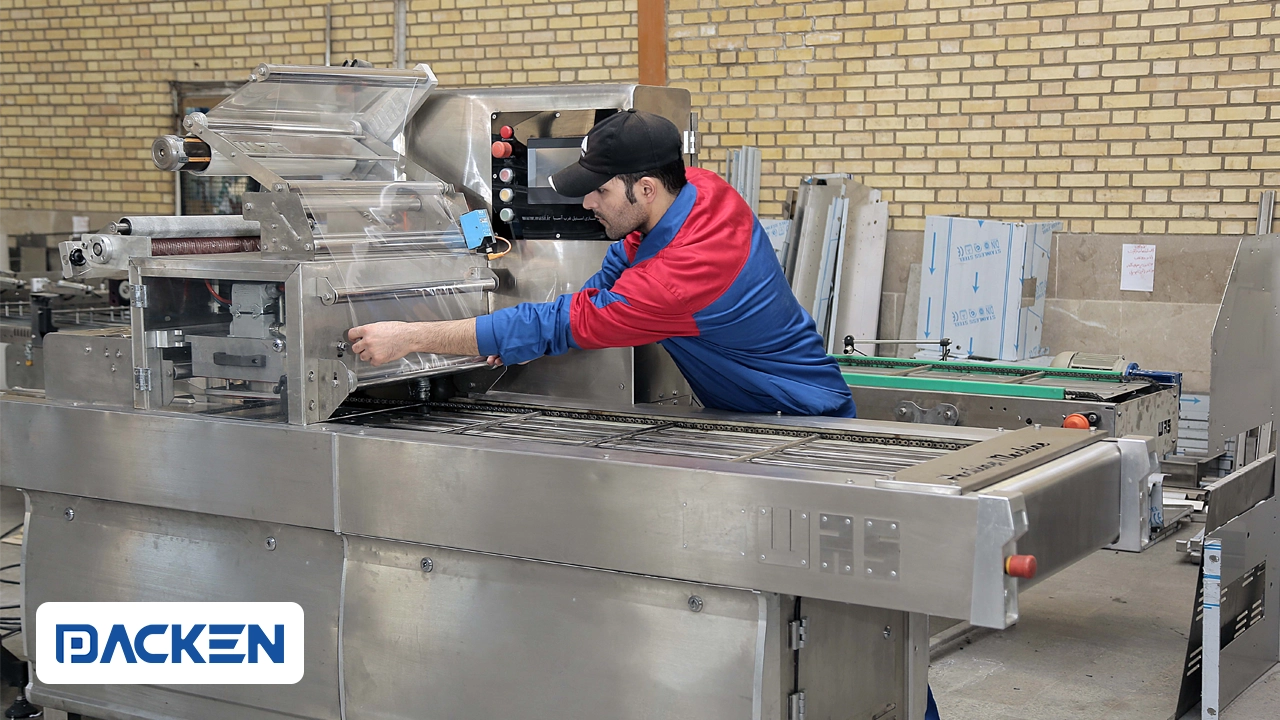
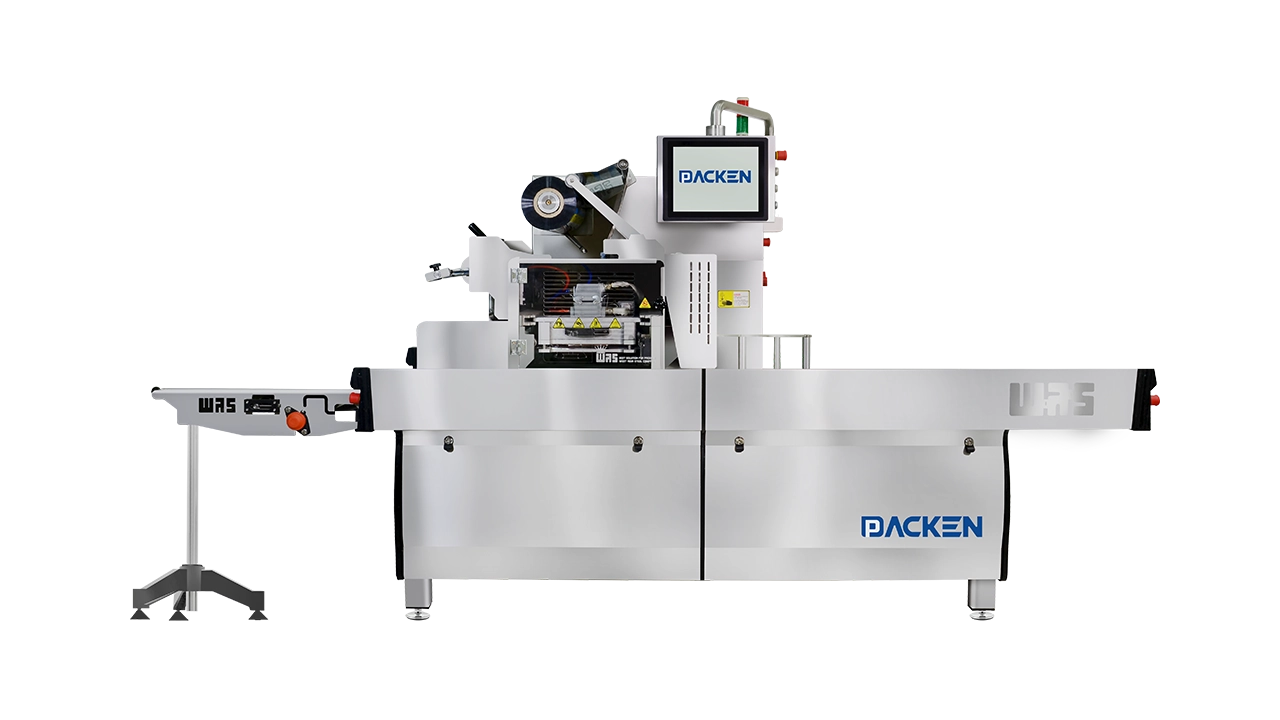
The Automatic Tray Sealer Packaging Machine is one of the products manufactured by Packen Company for chocolate packaging. This machine operates automatically with high speed and precision in packaging chocolates.
- During the packaging process, trays are initially placed on a conveyor by either the machine or an operator.
- Then, a volumetric filling machine fills these trays.
- Once filled, the trays are directed into a machine where they undergo vacuuming.
- After the vacuum stage, the trays are ejected from the machine and guided towards a labeler and jet printer using a conveyor belt. Finally, the sealed trays are collected on a traffic table.
Semi-Automatic Tray Sealer Packaging Machine
The Semi-Automatic Tray Sealer Packaging Machine is other machine used for packaging chocolates.
- This machine operates similarly to the automatic version but requires some manual operations performed by an operator.
- It is typically used for lower production capacities. During the packaging process, after the trays are filled, the operator rotates the table of the machine 180 degrees and then initiates the sealing command.

Vacuum chamber packaging machine
Another machine used for chocolate packaging is the Vacuum Chamber Packaging Machine.
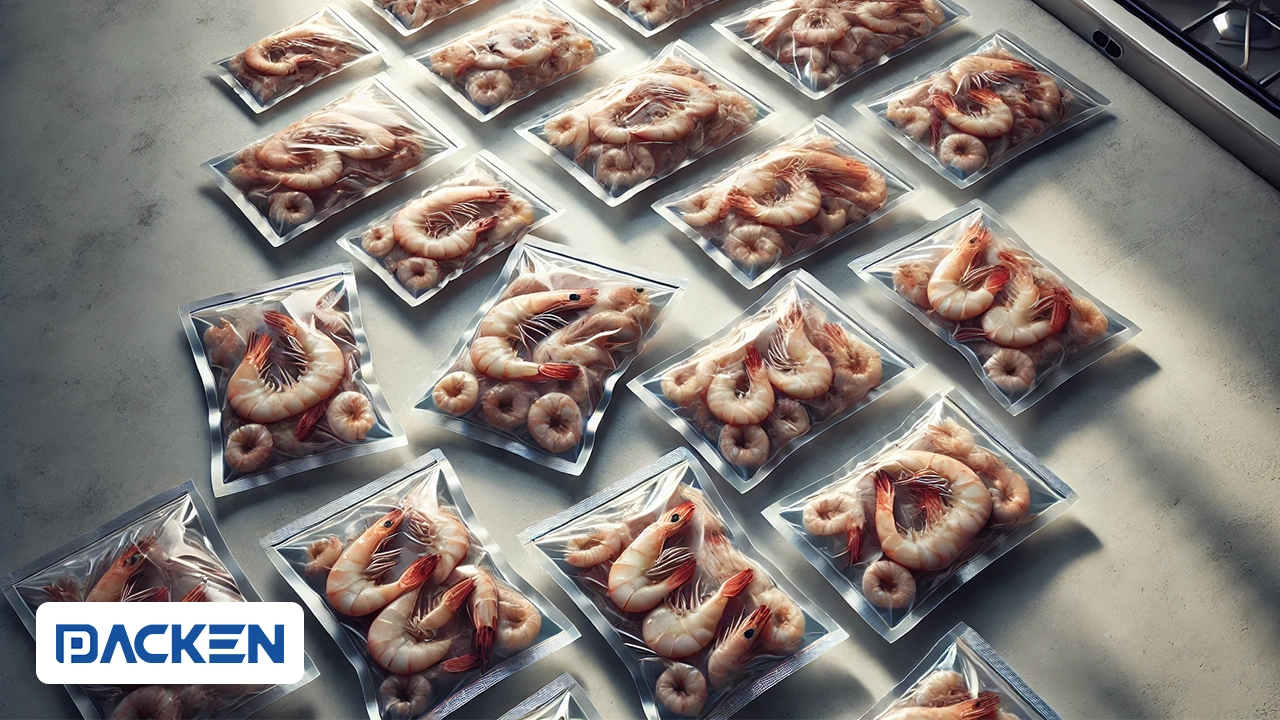
- Firstly, the operator fills the plastic pouch with chocolates.
- Then, they place the pouches on the machine where the sealing vacuum process occurs.
- Finally, the operator manually picks up the sealed pouches from the machine, finishing the packaging process.

Each type of chocolate packaging machine has its own advantages and disadvantages. The best type of packaging machine is automatic, capable of automatically handling the highest capacity of packaging in a short period of time.
Advantages of Tray Sealer Packaging
- Preservation of Product Quality
- Customer Appeal
- Increased Profitability
- Reduction of Contamination
- Extended Shelf Life
Important of chocolate packaging
The importance of chocolate packaging is underscored by several critical reasons:
- Preservation of Taste and Quality
- Temperature Control
- Protection Against Light
- Moisture Control
- Protection Against Spoilage
- Ease of Transportation
- Product Safety
- Product Information
- Traceability
- Enhanced Marketing
- Social and Economic Factors
The chocolate packaging process must protect the product and consider environmental and social factors such as:
- Energy Costs
- Material Costs
- Social Awareness and Environmental Impact
- Regulations on Pollutants and Waste Disposal
Challenges of Chocolate Packaging
Among the quality issues that chocolates may encounter, the most common ones are blooming (fat bloom), spoilage, and infestation by insects. Blooming refers to a problem where during production, storage, and sale, the surface of chocolate becomes unevenly covered with white spots, causing the entire surface to turn white and lose its shine. Additionally, the inside of the chocolate gradually becomes gritty and loses its smooth texture. According to previous studies, chocolate bloom is divided into two types: sugar bloom and fat bloom. When the moisture around chocolate is too high, water vapor causes the crystallized sugar on the surface of chocolate to melt. When humidity decreases, sugar re-crystallizes and forms sugar bloom on the chocolate surface. In comparison, fat bloom (chocolate bloom) is more likely to occur and significantly affects the quality of chocolate. By microscopic observation, chocolate is covered with a crystalline network composed of fat molecules, while liquid fat molecules, cocoa powder, sugar powder, and other raw materials are uniformly distributed within the crystalline network. As the ambient temperature rises, liquid fat molecules with a high melting point gradually migrate to the surface of the chocolate, resulting in bloom formation.
Usually, to cover the surface of chocolates, nuts rich in protein such as hazelnuts, almonds, peanuts, and walnuts are commonly used. Since nuts are rich in oils, these oils are easily affected by light, temperature, oxygen, and water vapor, leading to hydrolysis, rancidity, and oxidative processes that emit undesirable odors and affect the taste of chocolate.
In comparison to the above issues, the impact of visual insects is more critical. On one hand, insects are attracted to chocolates due to contamination of raw materials during the production process. On the other hand, improperly sealed packaging or gaps in the packaging allow insects to enter and thrive in the chocolate.
All quality issues such as blooming, insects, or chocolate becoming rancid can arise due to various complex factors including the composition of raw materials, processing methods, storage conditions, and packaging techniques. Therefore, throughout the chocolate production and storage cycle, its quality can be controlled by adjusting raw material components, additives, temperature, and cooling processing techniques. Once the product is sold, storage conditions are beyond the control of the manufacturer, emphasizing the critical role of packaging.
Features of Good Chocolate Packaging
Chocolate packaging, to ensure the quality of the products, should possess the following properties:
- One of the key features of chocolate packaging is preventing the penetration of vapor and external water into the package. In humid environments, the sugar present in chocolate can dissolve. When the water evaporates, the sugar re-crystallizes, forming white particles on the surface of the chocolate. This phenomenon is known as chocolate bloom. Packaging that acts as a barrier against high humidity reduces the likelihood of these phenomena occurring and can preserve the chocolate in good condition.
- In chocolates containing nuts and fatty ingredients, packaging should not only prevent water vapor penetration but also block oxygen entry. Reducing oxygen permeation in the packaging materials helps prevent oxidative deterioration during storage. Excessive exposure of chocolate to oxygen causes oxidation and creates undesirable flavors. White and milk chocolates, rich in dairy products and low cocoa content, are therefore more susceptible to oxidation compared to dark chocolate.
Due to the possibility of fat bloom occurring under high temperatures and severe temperature fluctuations, the thermal insulation properties of the packaging should not be overlooked.
In the packaging process, adopting proper water sealing methods at low temperatures is essential. This approach can effectively prevent insect entering, ensuring product sealing.
Moreover, good air sealing is a fundamental requirement for all food packaging, including chocolates. Improper air sealing allows air and moisture to penetrate the packaging, which can adversely affect the quality and taste of chocolates over the long term.

Which materials can be used in the chocolate packaging process?
The evolution of chocolate packaging has always focused on packaging materials and forms that can meet the aforementioned requirements. The following items are used in the chocolate packaging process:
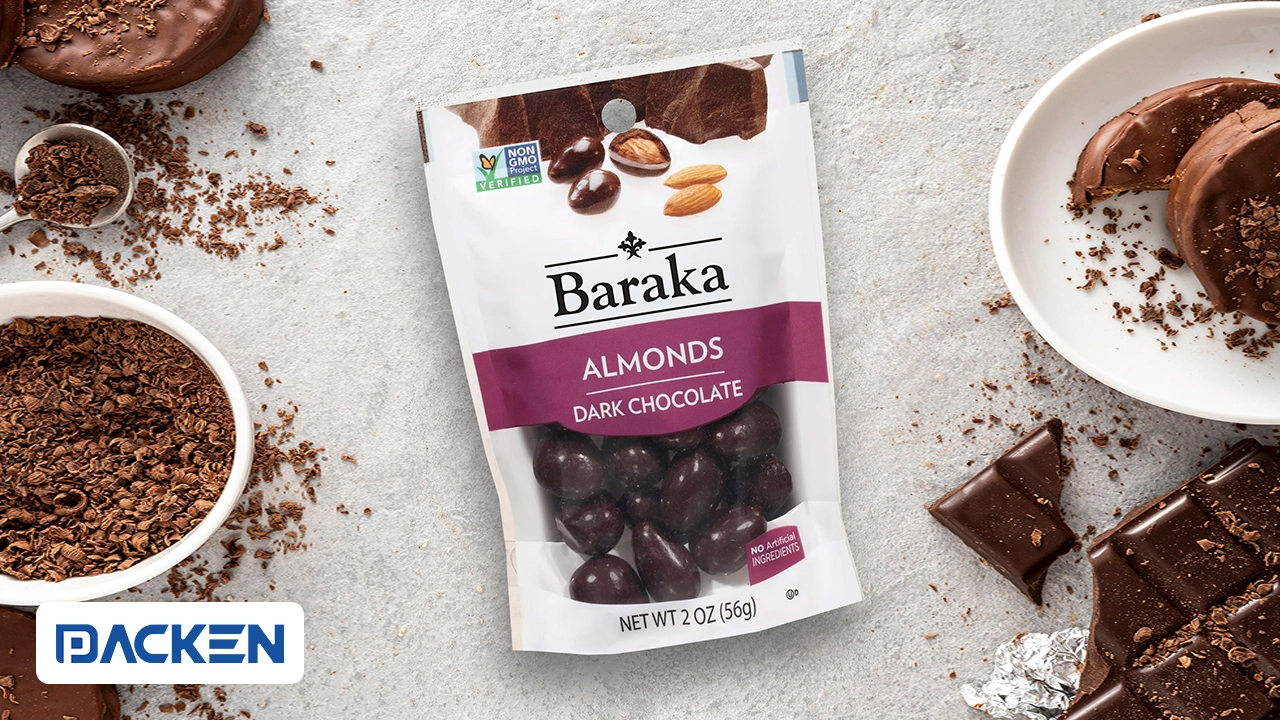
Chocolate is offered in various types of packaging, ranging from foil and plastic packaging to simple cardboard boxes. Foil packaging is often used for chocolate bars and individual pieces like truffles or chocolate-covered sweets. They create an attractive covering that preserves the chocolate’s flavor.
Mass-produced chocolates are typically packaged in complex plastics. This type of packaging is cost-effective and provides protection against moisture and external factors.
Cardboard boxes are used for packaging chocolate pieces and gift boxes of chocolates. These boxes can be elaborate and come in various sizes and shapes. Often, if a cardboard box is used, the chocolates inside are wrapped in complex plastic, as cardboard provides significant protection against air, odor, and moisture.
| Plastic | Good durability and protection, beauty, affordable price, and recyclability |
| Paper | Easy to transport, lightweight, affordable, limitations in industrial usage,
can be saturated by moisture and oil (if not coated). |
| Aluminum | Lightweight, less visual appeal, low mechanical strength, thermal conductivity of 203 W/mK, which can cause chocolate to melt. |
How to Choose the Right Machine for Chocolate Packaging
The following elements are crucial when setting up the chocolate packaging process. Paying attention to these elements affects your production:
- Available Space: The size of the available space determines the chocolate packaging process. For example, if you have limited workspace, opt for small-scale chocolate packaging processes. This allows you to have sufficient space for operations and maintenance.
- Automation: If you intend to employ fewer operators, consider automated packaging processes. Automation also enhances efficiency, reliability, and the capacity of the chocolate packaging process. Using automatic tray sealers, semi-automatic machines, and vacuum chamber stainless steel from West Asia steel minimizes operator involvement, thereby improving hygiene in packaging.
- Quality Standards: Ensure that the chocolate packaging process complies with international standards.”
- Budget: The budget you have determines the type of chocolate packaging process you can implement. For example, if you have a limited budget, manual or semi-automatic packaging processes may be suitable for you. However, if you have a larger budget, an automatic packaging process is more suitable for increasing production speed and accuracy. Therefore, the most important consideration when setting up a chocolate packaging production line is paying attention to the budget and the prices of different machines.
- Auxiliary Equipment: Using auxiliary equipment increases production capacity and machine efficiency.
- Production Speed and Capacity: If you have high demands, you should set up a fully automatic packaging process. Fully automatic chocolate packaging processes have higher production capacities compared to semi-automatic or manual versions.
- Ease of Maintenance: This feature in tray sealers helps you avoid replacing the entire machine, thus reducing maintenance costs. Proper maintenance reduces the overall expenses of the equipment.
- Low-Cost Packaging Techniques: Using cost-effective packaging methods helps in cost reduction. For example, employing cold-water sealing instead of hot-water sealing for chocolate products leads to cost savings.
- An important consideration in chocolate packaging is the material of the packaging machines. They should be easy to clean and resistant to corrosion. Considering this importance, packaging machines from Packen Company possess these features:
- Made entirely from 304 stainless steel
- Scratch-resistant and glossy stainless steel with high aesthetic appeal
- Easy to clean
- Resistant to corrosion and color change when contacting with food and cleaning materials

The Price of Chocolate Packaging Machines
The price of chocolate packaging machines at Packen Company, one of the most sought-after manufacturing sets, varies based on several factors, which are detailed below:
- Raw Materials Used in Packaging
- Quality of Materials Used in Construction
- Automation Level (Automatic or Semi-Automatic(
- Type of Product Being Packaged
- Size of the Machine According to Production Stages
- Payment Conditions (Installment Plans)
- After-Sales Services
Consultation and Purchase of Chocolate Packaging Machine
Among the advantages of chocolate packaging, we can mention protection against heat, playing a fundamental role in sales, branding, and creating interactive and promotional environments. Suitable chocolate packaging not only preserves the aroma, taste, and quality of chocolates until they reach the consumer but also enhances visual appeal, contributing to product advertising.
If you are considering acquiring a chocolate packaging machine for your business or company, you can contact our technical experts at Packen Company to benefit from our free technical consultations. Alternatively, you can complete a consultation form, and our team will promptly get in touch with you. With over 22 years of experience in this field, we have extensive expertise and can guide you in purchasing the best equipment at competitive prices.